
Transforming Financial Technologies
Digital alchemy: transforming financial technologies through human connection.
The Moment of Transformation
In my early career as a banker introducing online banking to skeptical customers, I witnessed their expressions transform from doubt to wonder. These moments crystallized my career philosophy: technology isn't just code — it's a bridge between people and possibilities.
Over the years, I've led mobile technology initiatives that bridged financial services with healthcare, retail, transportation, and beyond — creating digital ecosystems where previously there were only siloed operations. This cross-sector expertise has given me a unique perspective on how financial technologies can learn from and integrate with innovations across the digital landscape.
In those early days, customers approached online banking with understandable hesitation:
"Do I need a teller?" they'd ask, eyebrows raised. "How can I trust something on the Internet?" "What happens if the Internet breaks?"
I wasn't merely demonstrating features but transforming fear into curiosity and distrust into confidence. Each interaction taught me that breakthrough technology requires breakthrough communication — a lesson that would shape my 25-year journey through digital innovation.
From Banking Terminals to Biometric Authentication
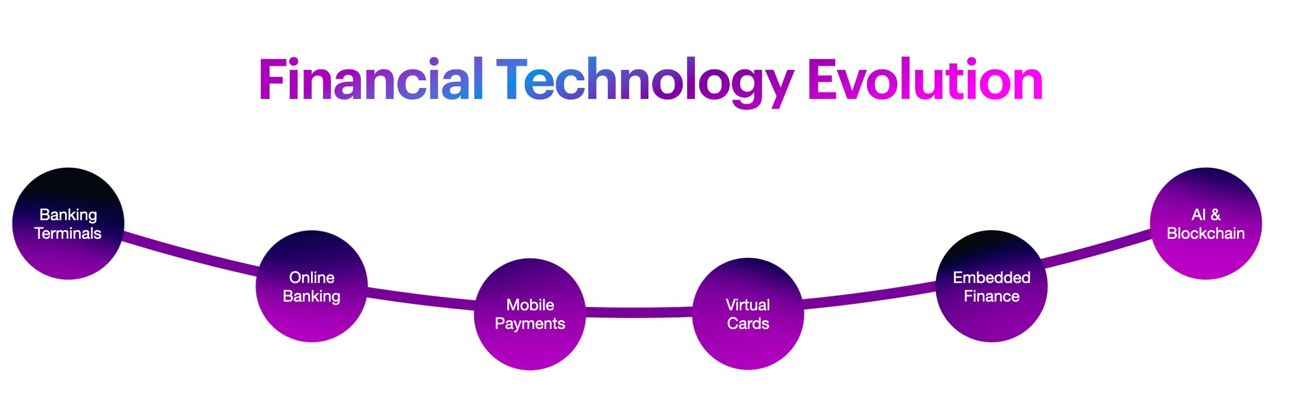
My professional odyssey began at that bank counter but quickly became more profound. The online banking interface I once proudly showcased — clunky, limited, and revolutionary for its time — seems almost primitive compared to today's seamless financial ecosystems. I've witnessed an extraordinary rate of transformation:
- From passwords to facial recognition and behavioral biometrics.
- From siloed banking services to integrated financial ecosystems.
- From customer skepticism to the expectation of digital-first experiences.
- From bulky wallets to frictionless mobile payments.
- From reactive security to predictive threat intelligence.
This evolution has never been merely technical. Behind every innovation lies a fundamentally human story — of trust, accessibility, and the quiet magic of technology that disappears into everyday life. It mirrors the evolution of payment networks themselves — from simple transaction processors to complex ecosystem orchestrators enabling countless interactions across billions of touchpoints globally.
The Liberation of Wallet-Free Living
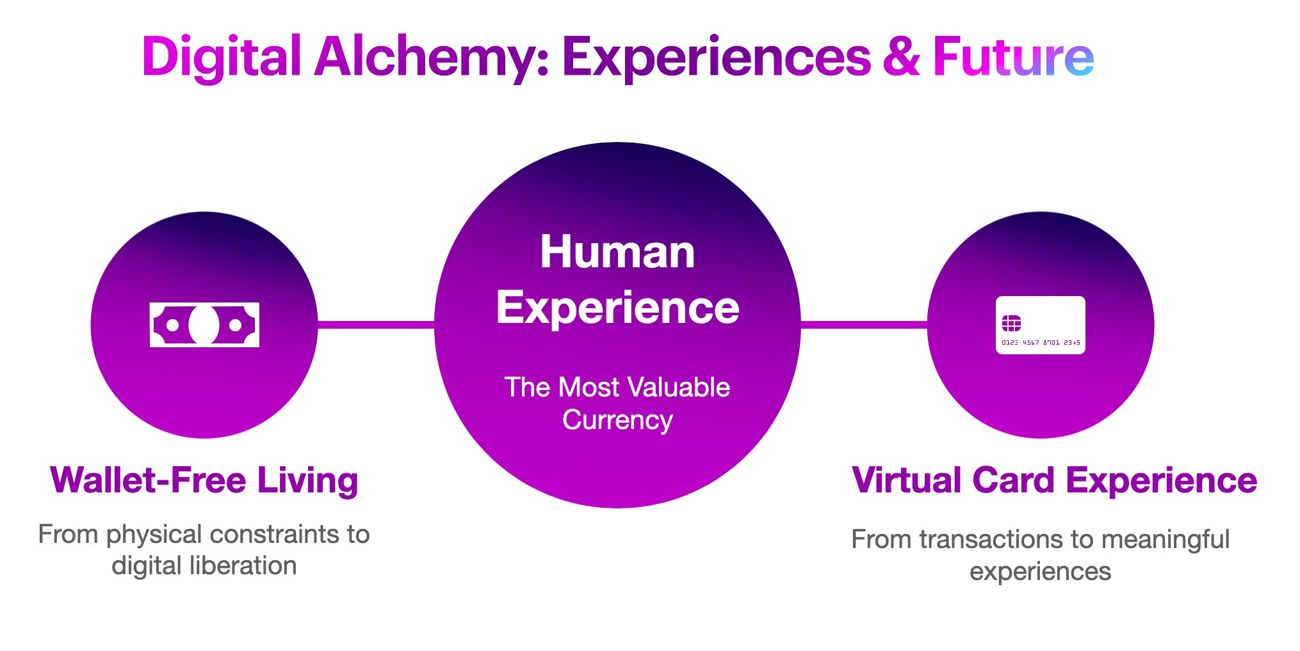
The simple joy of leaving home without a physical wallet represents everything we've been working toward in financial technology. That gentle tap to complete a transaction with my phone isn't merely convenient — it's a fundamental shift in how we interact with money and commerce.
The journey from bulky leather wallets stuffed with cards to the elegant tap of a mobile device mirrors our broader evolution:
- From physical constraints to digital liberation.
- From carrying multiple cards to consolidating everything in one secure device.
- From transaction friction to effortless interaction.
- From worrying about forgotten wallets to always having payment capabilities on hand.
This transformation epitomizes what excites me most about financial technology — when done right, it doesn't just improve existing processes; it fundamentally changes how we live. As traditional plastic cards become virtualized, networks must redefine their value proposition beyond the physical card rails they've long dominated. The most forward-thinking networks are already positioning themselves as experience enablers rather than mere transaction processors — a crucial distinction in a world where payment has become increasingly invisible.
The Immersive Magic of Virtual Financial Experiences
When I signed up for my Apple Card, I was unprepared for how captivated I would become. It wasn't just another credit card but an entirely new relationship with my finances through thoughtfully designed virtual interactions.
The moment the application appeared on my screen, I knew this was different. The sleek, minimalist interface guided me through each step with intuitive precision. There was no paperwork, no waiting periods — just a flowing digital conversation.
What truly hooked me was the moment of integration. As a technologist, I watched the virtual card materialize in my Apple Wallet with a sense of witnessing financial magic. The subtle animation created a sense of accomplishment that no physical card delivery could ever match. The seamless transition from application to activation demonstrated what exceptional fintech UX should be: invisible yet delightful, functional yet emotionally resonant.
This highlights a critical insight for payment networks: the moment of payment is no longer just a transaction — it's an opportunity to create memorable brand experiences. When networks enable these moments of delight, they transform their role from infrastructure providers to experience architects.
UX/UI: Where Financial Technology Becomes Personal
The genius of well-designed financial interfaces lies in how they transform abstract concepts into visual, tactile interactions:
- The color-shifting card in my digital wallet reflects spending categories.
- Intuitive summaries transform raw transactions into meaningful patterns.
- Satisfying visual feedback when paying balances makes financial responsibility feel rewarding.
- Seamless integration across devices creates a consistent ecosystem around finances.
This obsession with virtual experience fundamentally alters our relationship with money. I check spending patterns more frequently, make more conscious decisions, and feel more connected to my financial health. For networks traditionally operating in the background, this shift toward engaging interfaces is an opportunity to establish more direct relationships with end users — becoming essential partners in the financial wellness journey rather than just facilitating money movement.
Beyond Convenience: The Emotional Impact of Thoughtful Design
What began as an appreciation for convenience has become a profound fascination with how thoughtful digital design creates emotional connections to financial tools. Virtual cards transcend their utilitarian purpose — they orchestrate moments of genuine delight:
- The subtle haptic feedback confirming a successful payment.
- Clean, clear notifications that make financial awareness feel less intrusive.
- Intuitive gestures that make managing money feel as natural as any other smartphone interaction.
When designed with human experience at the center, banking and payment technologies become companions in our financial journey, subtly guiding us toward better habits through beautiful, meaningful interactions.
The Human-Centric Innovation Manifesto
After years of building digital products, my innovation philosophy distills into three fundamental principles:
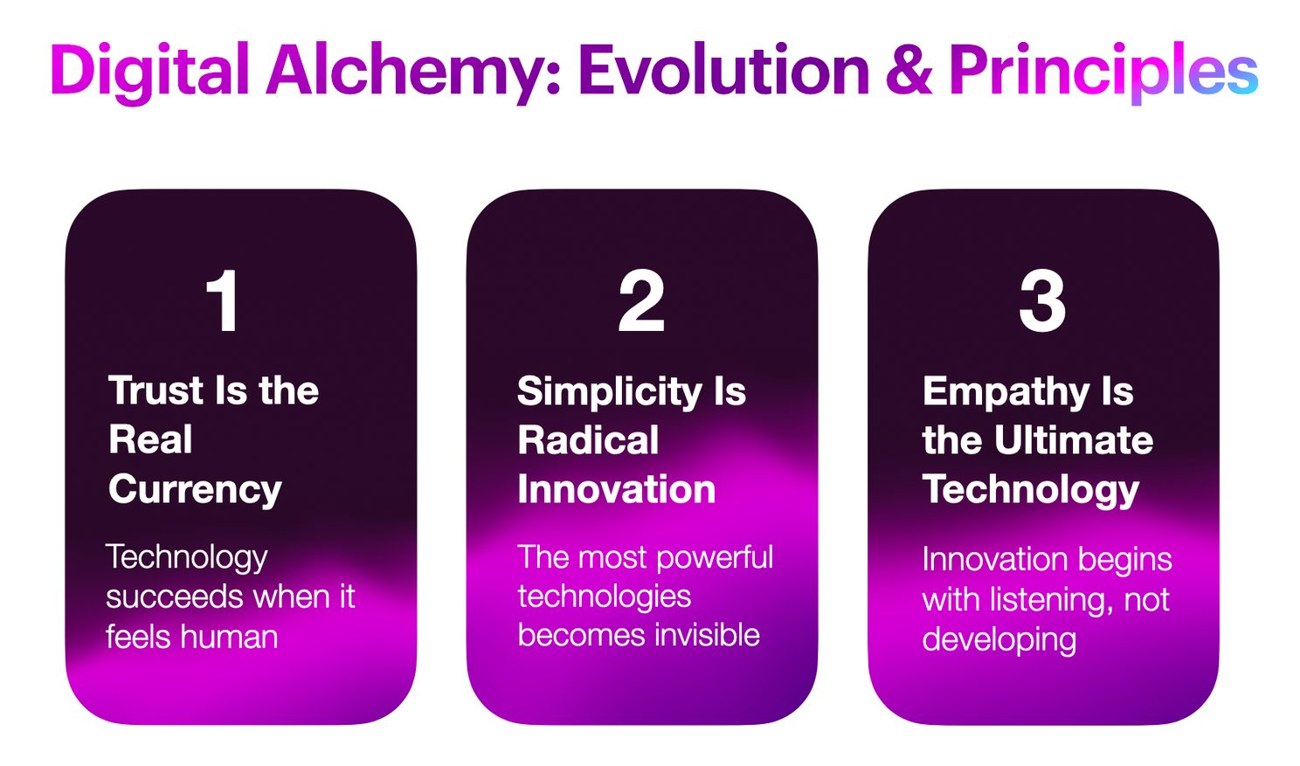
- Trust is the real currency. Technology succeeds when it feels human. Every security feature must communicate safety, not just provide it. Innovation must speak the language of comfort, not complexity.
- Simplicity is radical innovation. The most powerful technologies become invisible in everyday use. User experience trumps technical complexity every time. If my grandmother can't use it, it isn't genuinely innovative.
- Empathy is the ultimate technology. Understanding user concerns matters more than solving technical problems. Every solution addresses a human need or fear. Innovation begins with listening, not developing.
These principles offer guidance for payment networks navigating increasingly complex landscapes — from blockchain to quantum computing. The networks that thrive won't necessarily be those with the most advanced technology, but those that use technology to create the most human experiences.
The New Financial Experience Horizon
Recent developments have further validated the human-centered approach:
- Super-apps evolution. The Western market's growing adoption of consolidated financial ecosystems mirrors the journey from siloed banking to integrated experiences.
- Zero-knowledge proof applications. As privacy concerns intensify, networks pioneering these technologies show how complex security can remain invisible to users.
- Regenerative finance. The intersection of sustainability and financial services creates opportunities to facilitate value exchange beyond monetary transactions.
The acceleration of embedded finance has validated this vision. Consumers now expect contextual financial services within non-financial applications. As generative AI increasingly influences financial decision-making, the networks that balance algorithmic efficiency with emotional intelligence will define the next generation of experiences.
The Future Is Human-First Digital Finance
The future of financial technology lies in what it enables us to do and how it makes us feel. As we advance into an era of artificial intelligence, blockchain, and ambient computing, the most successful institutions will understand that digital transformation isn't merely about technology — it's about reimagining relationships.
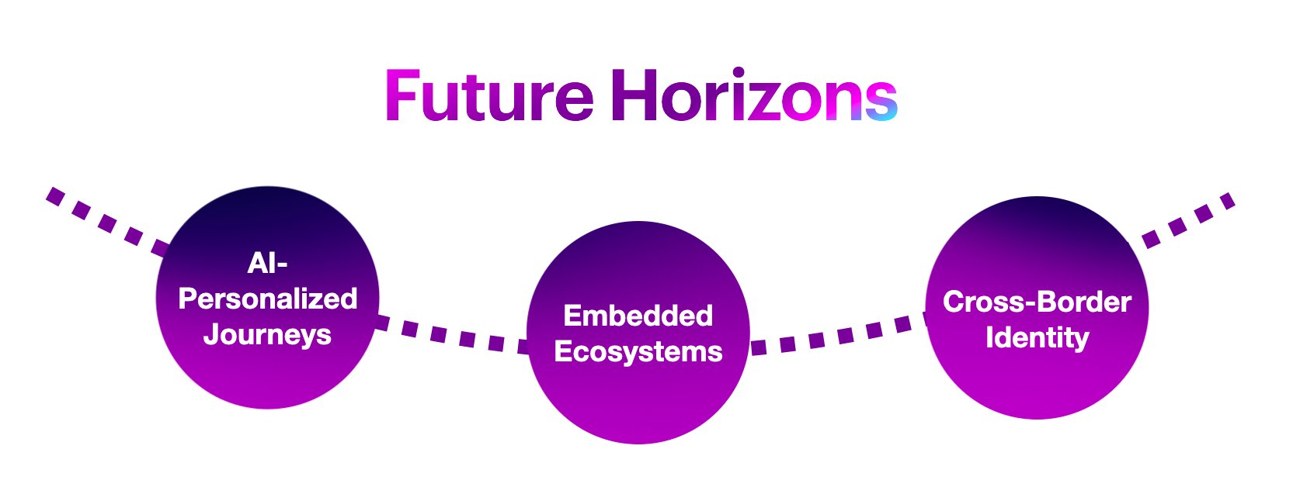
For payment networks, this future presents unprecedented opportunities to evolve from transaction processors to ecosystem orchestrators:
- AI-personalized financial journeys. Networks sitting at the intersection of billions of transactions have unparalleled data to power personalized experiences — showing consumers what they've spent and proactively guiding their decisions.
- Blockchain integration. I've seen blockchain evolve from a theoretical concept into tangible applications. Networks have a unique opportunity to merge long-established trust with the transformative power of innovation.
- Embedded financial ecosystems. The future belongs to financial services woven invisibly into everyday life — a car that arranges its own financing, a refrigerator that reorders groceries, a healthcare device that files its own claims. Networks can become the invisible connective tissue.
- Cross-border identity solutions. As transactions transcend geography, networks are uniquely positioned to solve digital identity across borders — enabling secure, frictionless commerce without compromising privacy.
Conclusion
My journey from behind that bank counter to leading digital innovation has taught me that the most powerful technology is the one that disappears, leaving only the human experience it enables. When we design financial tools that respect emotions, honor dignity, and amplify capabilities, we build better futures — not just better products.
True digital alchemy doesn't involve turning code into products — it involves transforming transactions into relationships, complexity into clarity, and uncertainty into confidence. Ultimately, the most valuable currency isn't digital or physical — it's human.