
AI's Green Revolution
Starting AI's green revolution: how B2B solutions can pioneer a sustainable future.
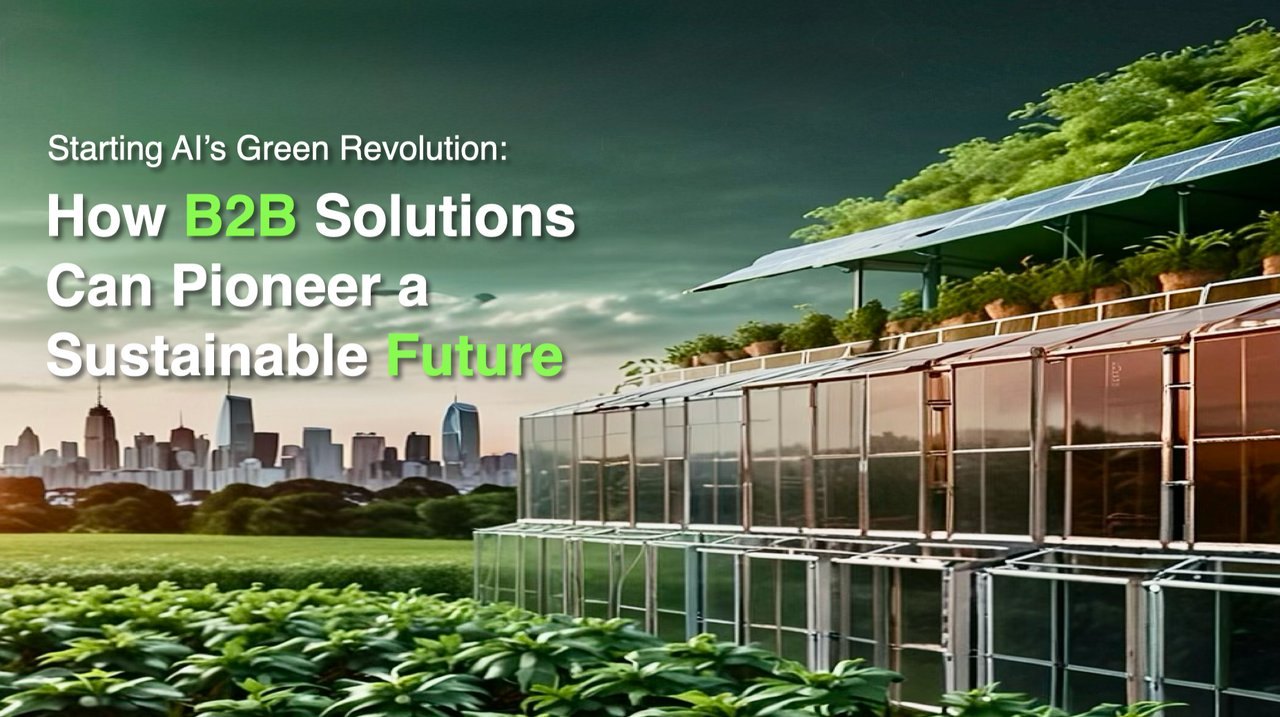
The Intersection of AI and Sustainability
In my previous article, "Navigating the Dual Learning Curve: AI and Human Transformation," I explored how the evolving relationship between humans and AI is transforming industries. That reflection sparked another realization: while AI is revolutionizing how we work and live, its rapid adoption comes with a significant challenge — its immense energy demands.
AI's potential to enhance efficiency and solve complex problems is unparalleled. Yet as organizations increasingly rely on AI for a competitive edge, the energy required to power data centers and machine-learning models continues to surge. This rise directly impacts carbon emissions, raising an urgent question: can we ensure AI's growth aligns with our global sustainability goals?
The answer lies in a dual-pronged approach: advancing AI capabilities while integrating renewable energy into its infrastructure. By combining technological innovation with green-energy adoption, businesses can reduce their environmental footprint, support global climate initiatives, and unlock sustainable growth — ensuring technology evolves responsibly.
How B2B Solutions Can Lead the Sustainability Charge
While AI's energy demands are critical, they're just one piece of the puzzle. Across industries, business-to-business (B2B) solutions hold immense potential to drive systemic change, embedding eco-conscious practices into the core of operations. They're uniquely positioned to help organizations achieve environmental and business objectives by tackling resource efficiency, carbon emissions, and sustainable sourcing.
B2B companies operate at the intersection of industries, providing tools, platforms, and frameworks that scale sustainable practices — creating ripple effects that extend beyond individual organizations into entire supply chains.
Why B2B Solutions Matter
B2B solutions form the backbone of industrial ecosystems — driving collaboration, optimizing processes, and enabling data-informed decisions. By integrating sustainability into these ecosystems, companies can foster environmental stewardship at scale, transforming industries while meeting the demands of a growing global population.
Three Key Areas of Impact
- Green finance — funding a sustainable future. Tailored financial tools such as green bonds, reduced-interest loans for renewable-energy projects, and eco-focused investment funds. Lowering financial barriers empowers businesses to adopt greener technologies, turning sustainability into a competitive advantage.
- Sustainable supply chains — transforming global networks. Platforms offering end-to-end supplier visibility, carbon tracking, ethical-sourcing assurance, and sustainability scoring. With supply chains spanning continents, they help identify inefficiencies, mitigate risk, and enact change at scale.
- Energy efficiency — smarter operations. Tools that analyze consumption, automate energy-intensive processes, and recommend efficiency upgrades. Optimizing energy usage cuts both operational cost and carbon footprint — aligning environmental responsibility with profitability.
Scaling the Impact: The Path to Lasting Change
The transformative potential of B2B solutions goes beyond individual initiatives. Three future-oriented strategies help businesses maximize environmental impact while driving innovation:
- Scaling circular economies. Platforms that enable resource recovery, recycling, and reuse minimize waste and close the loop across industries, fostering long-term sustainability.
- Enhancing transparency. Advanced analytics provide detailed insight into emissions, water usage, and sourcing — helping organizations meet regulatory requirements, strengthen stakeholder trust, and drive accountability.
- Fostering industry collaboration. Cross-sector networks co-create solutions, share best practices, and amplify collective impact — addressing sustainability holistically rather than in isolation.
Building a Sustainable Future
AI and sustainability are not just interconnected but essential components of a shared future. B2B solutions play a pivotal role in bridging these domains, offering innovative pathways to align cutting-edge technology with environmental responsibility. From green finance to sustainable supply chains and energy-efficient operations, they provide a roadmap to measurable environmental impact.
Yet the responsibility to act rests not only with individual companies but with collective industry effort. By embracing green innovation and fostering collaboration, businesses can create a future where technology, business, and the environment coexist. The time for action is now — leaders must recognize the dual potential of AI and sustainability as catalysts for transformation.
Let's commit to building a future where technology powers progress without compromising the environment — a truly sustainable tomorrow.