
AI & Human Transformation
Navigating the dual learning curve: AI and human transformation.
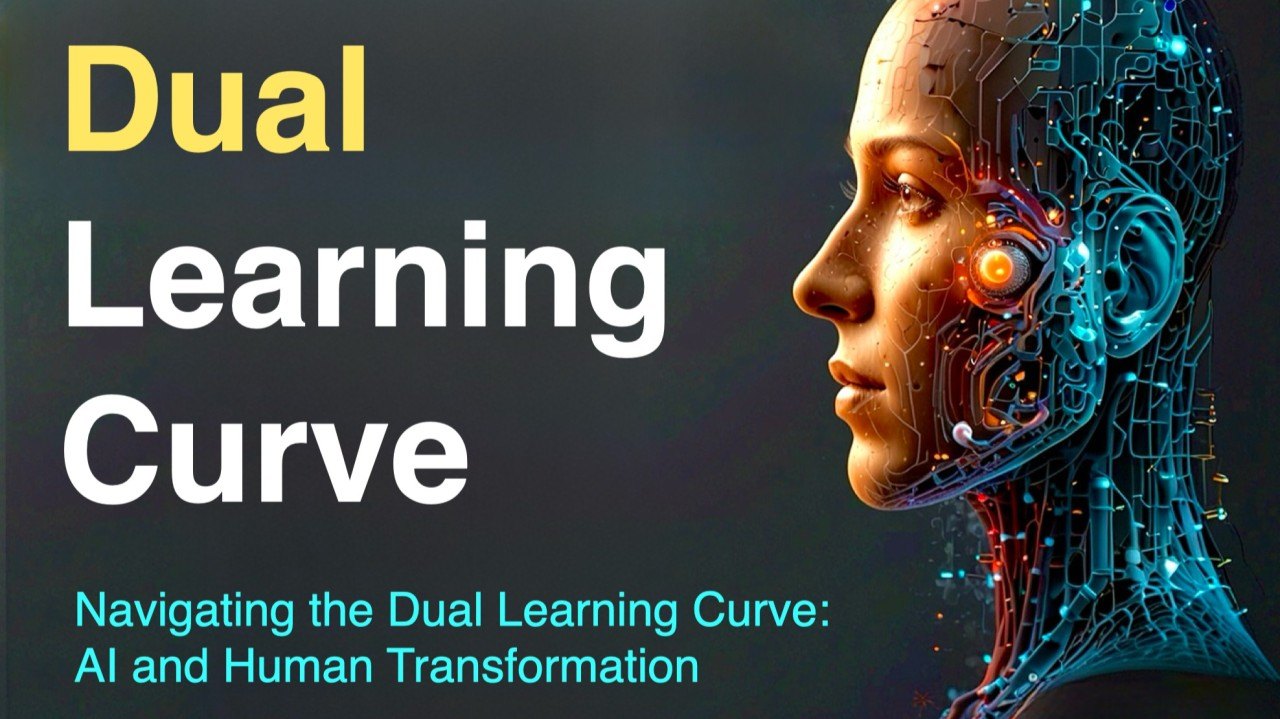
The AI learning curve is transforming how humans and machines evolve. This is not merely a technical phenomenon but a cultural shift — redefining how industries operate, how decisions are made, and how innovation is driven. As the world increasingly adopts AI, the challenge lies in navigating this dual learning curve: machines advance in intelligence while humans adapt their approach to collaboration and innovation.
The Human Side: Adapting to an AI-Driven World
Humans are at the forefront of adapting to AI's integration into daily life and business. This shift requires not only technical understanding but cultural and organizational readiness to embrace change. Organizations must cultivate environments that encourage continuous learning, creativity, and adaptability. Trust and collaboration with AI systems are becoming vital as teams work alongside intelligent machines toward shared objectives.
A study by McKinsey found that over sixty percent of global companies plan to reskill or upskill their workforce in response to AI advancements. Take Amazon as an example — its "Career Choice" program invests in training employees for in-demand skills, empowering them to thrive alongside AI-driven technologies like machine learning in supply chain and customer personalization.
The Machine Side: Advancing Beyond Automation
Machines have evolved significantly, moving from simple automation to capabilities that mirror human decision-making. AI systems can now process vast amounts of data, learn from patterns, and provide previously unattainable insight. Their potential to enhance decision-making, streamline operations, and predict outcomes has become a cornerstone of modern business strategy.
OpenAI's GPT models and Google's DeepMind are pushing the boundaries with advanced reasoning and prediction. A partnership between Microsoft and OpenAI makes generative AI widely accessible through platforms like Azure OpenAI Service — demonstrating how machines not only automate tasks but enable creative and strategic decision-making, from generating marketing content to writing software code.
Key Trends Shaping 2025
As AI adoption accelerates, several trends are shaping its trajectory across industries:
- AI democratization. Accessibility is expanding through low-code and no-code platforms, empowering non-technical professionals to innovate. Tools like Microsoft Power Automate and Google's AutoML let non-technical users design AI workflows — SMBs can run predictive analytics for marketing without large IT budgets.
- Ethical AI. As reliance grows, so does the need for transparency, fairness, and accountability. Initiatives like IBM's AI Fairness 360 Toolkit help evaluate and mitigate bias, while the EU's proposed AI Act sets a regulatory framework.
- Human-AI collaboration. Collaborative technologies enhance productivity and decision-making. Companies like UiPath advance robotic process automation, letting employees offload repetitive tasks — UiPath's tools helped Cleveland Clinic optimize administrative workflows, saving hundreds of hours annually.
- Cross-industry transformation. From healthcare to retail to financial services, AI enables industries to innovate and deliver enhanced value. The World Economic Forum notes that eighty-five percent of healthcare organizations already use AI in clinical and operational capacities.
AI's Role in Industry Transformation
- Financial services. AI's capabilities in fraud detection, customer personalization, and risk management are setting new standards. FICO's fraud-detection tools have reduced losses by billions annually; JPMorgan Chase's COiN platform analyzes thousands of legal documents in seconds.
- Healthcare. AI in diagnostics, patient care, and administration improves outcomes while reducing cost. Google Health's AI diagnostics have shown near-human accuracy in detecting conditions like breast cancer, and startups like Tempus tailor cancer treatment by combining genomics and clinical data.
- Retail. Predictive analytics and AI-driven personalization transform customer experience and supply chains. Walmart uses AI to optimize inventory and reduce waste; personalization tools from companies like Salesforce have significantly increased conversion rates.
The Road Ahead: Opportunities and Challenges
While AI offers vast opportunity, its implementation comes with challenges that require careful navigation. Organizations must prioritize training and upskilling to align with AI-driven change. Addressing ethical considerations is essential for building trust and ensuring long-term sustainability. Leaders must bridge the gap between AI's potential and its practical application, creating environments where humans and machines thrive.
The World Economic Forum predicts that by 2030, over one billion jobs will be transformed by technology — underscoring the urgency of workforce development. Ethical considerations are equally critical: Clearview AI faced backlash over privacy violations, a reminder of how important trust and accountability are in AI use.
Leading Through the Dual Learning Curve
The journey along the AI learning curve is a collective effort, blending human ingenuity with machine intelligence. This era demands adaptability, collaboration, and a forward-thinking mindset. By embracing the interplay between human and machine capabilities, organizations can unlock unprecedented innovation and growth.
The focus must remain on creating a future where AI serves as a catalyst for transformation — driving industries forward while empowering people to achieve extraordinary outcomes.
The conversation is just getting started. If you're a leader pioneering new paths in this era, I'd love to chat. Together, we'll discover how embracing the dual learning curve can deliver real business benefit and keep your organization at the forefront of innovation.