
Teradata Digital Transformation
A digital transformation case study in enterprise data and analytics.
As VP, Global Digital Marketing & CX Transformation Practice, I led the most prominent digital transformation in Teradata's history — a NYSE-listed, $2-billion enterprise-software company and metadata-warehouse and analytics provider with 8,500 employees.
With 160+ marketers worldwide but just 15 specializing in digital, the challenge was as much organizational as technical: building both the business case and the sense of urgency for change.
Focusing on Three Core Areas
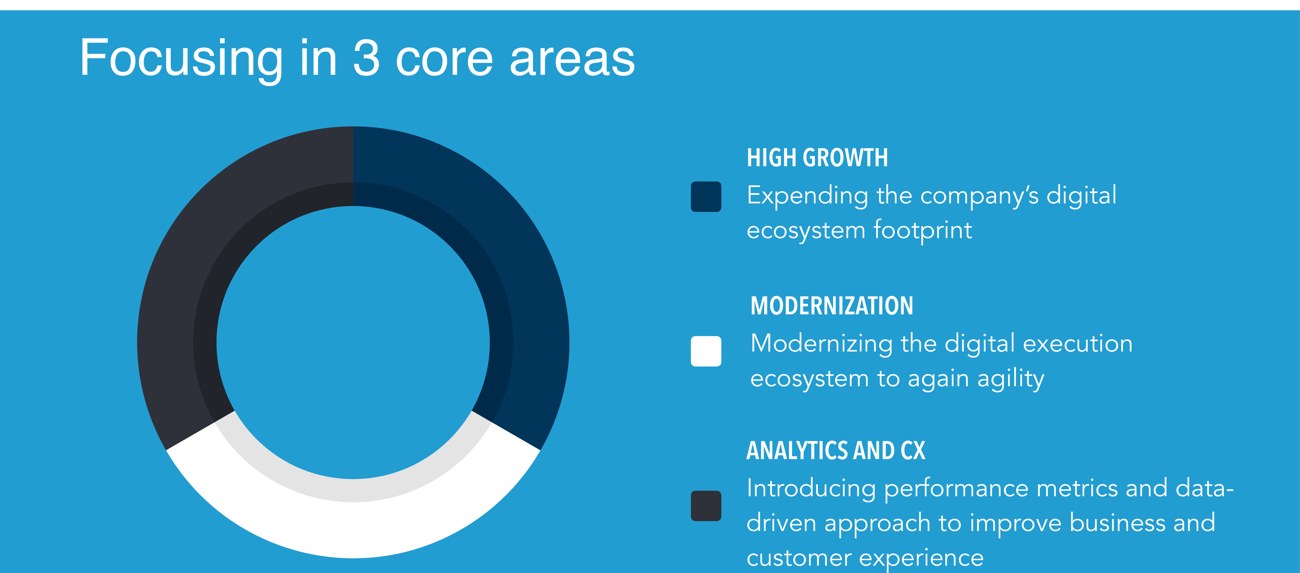
- High growth. Expanding the company's digital ecosystem footprint.
- Modernization. Modernizing the digital execution ecosystem to regain agility.
- Analytics and CX. Introducing performance metrics and a data-driven approach to improve business and customer experience.
The Project
The business case was straightforward: accelerate digital efforts and pivot from a hardware to a software company to retain existing customers and attract new ones. Doing so meant changing the brand perception of a traditional legacy company into a modern digital entity — built around an ambitious, customer-centric experience vision.
The company was attached to conventional ways of working, such as purely face-to-face sales. Getting people to act quickly and move to a hybrid model — introducing online subscription via high-touch digital channels — was the ultimate challenge. The methodology combined several strategic and operational elements to instill a "Digital First" mindset throughout the organization.
Results — In Just Over 12 Months
- Launched the digital marketing strategy within the first three months of joining.
- Defined the company's digital marketing strategic imperatives for the next 3–5 years.
- Declared six digital transformation guiding principles.
- Led organization-level talent-upgrade planning and action.
- Shifted go-to-market strategy from brand-awareness-only to brand-to-demand.
- Delivered new requirements for the Mar-tech stack.
- Developed business KPIs and target goals.
- Introduced a customer-experience-centric approach company-wide.
- Built the analytics engine — Power BI dashboards extracting insight to drive data-driven decision-making.
- Unified the customer digital experience by breaking silos into an omnichannel view.
- In March 2020, pivoted the in-person business to 100% digital to minimize COVID-19 impact.
- Won the 2019 global digital marketing transformation award, positioning the company as a challenger brand.
- Reworked the content-marketing model for relevant content and ongoing optimization.
- Launched a digital studio — a newsroom-style model to accelerate new global demand-generation campaigns.
Conclusion
In just over twelve months, a cross-functional, global effort forged a new path — transforming a traditional company into a growth-oriented, modern digital enterprise.