
Integrating AI Into Your Product
A practitioner's view on embedding intelligence where it creates real value.

AI has evolved from an unimaginable concept to an essential component of modern products. Building AI capability into a product is a complex but rewarding process.
Integrating AI is about more than adding a feature. It's about creating more thoughtful, more responsive solutions that can transform the user experience and provide significant business value.
As users grow more comfortable with digital products, AI capability can significantly enhance functionality, experience, and market competitiveness. But integration is complex and requires a solid foundation — a well-structured approach that ensures the capabilities are robust, scalable, and aligned with business objectives. When incorporating AI into your product, consider these eight foundational steps.
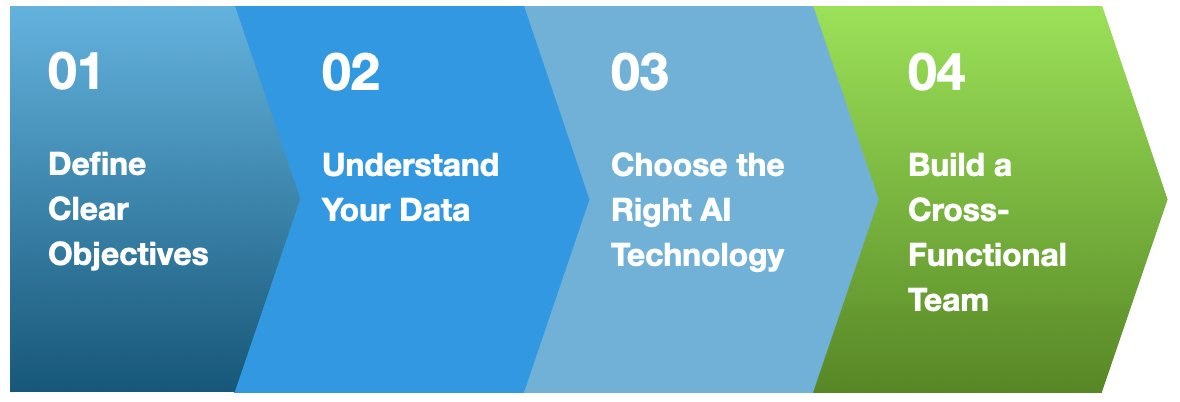
- Define clear objectives. Are you automating processes, improving experience, offering personalized recommendations, or gaining insight from data? Clear objectives shape your strategy and focus your choice of technologies and methods.
- Understand your data. AI thrives on data. Audit your sources, assess quality, identify gaps, and ensure you have access to the data needed to train and test your models. Success depends largely on the quality of the data it's built on.
- Choose the right AI technology. Not all AI is identical. Whether ML, NLP, data visualization, or predictive analytics, evaluate the strengths and weaknesses of frameworks and tools against your objectives.
- Build a cross-functional team. AI is more than a job for data scientists. It requires collaboration across product management, software and data engineering, and domain experts, so the capabilities are well-integrated, meet user needs, and align with business goals.
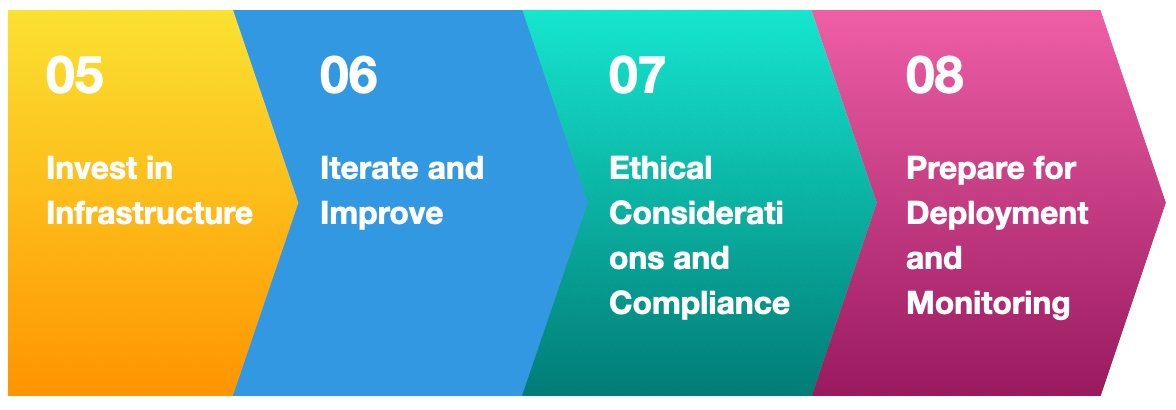
- Invest in infrastructure. AI often demands significant compute. The right infrastructure — cloud, high-performance computing, or specialized hardware — lets you develop, deploy, and scale effectively, with room for growing data loads.
- Iterate and improve. AI development is iterative. Ship basic capabilities in your first MVP, collect feedback, measure performance, and continuously refine your models as data, user needs, and technology evolve.
- Address ethics and compliance. Ensure your models are transparent, unbiased, and compliant with relevant regulations. Safeguards build user trust and protect against legal and reputational risk.
- Prepare for deployment and monitoring. Deployment isn't the end. Continuous monitoring ensures the AI performs as expected in real-world conditions — tracking performance, detecting anomalies, and adjusting as needed.
Conclusion
Building AI capability into a product is complex but rewarding. Follow these foundational steps and you can create AI-enhanced products that meet user expectations.
As AI evolves, staying informed and adaptable will be vital to maintaining a competitive edge.